Driving in China and the day-to-day of the trip
This is the stage where you are on the road: what a driving day looks like, fuel and tolls, hotels, food and paying by phone, and the things worth knowing before you take the wheel.
I was born in Switzerland and I have driven in most of Western Europe, the US and Canada, and personally, I love driving in China. Once you know a thing or two, it feels very similar to driving in the West.
Of course, like everywhere else in the world, driving in a big Chinese city is not much fun. It is the same in Italy or the United States: if you have been there, you know that driving in Rome or New York is not much fun either. Everyone is impatient, parking is expensive, it is easy to miss a turn and there is traffic more often than not. But go outside those cities, into the Italian countryside or small-town America, and it is a beautiful experience. In the same way, driving in Shanghai is not the best part of the trip, but driving in the mountains of Yunnan, the bamboo forests of Zhejiang or the grasslands of Inner Mongolia is something you will not forget.
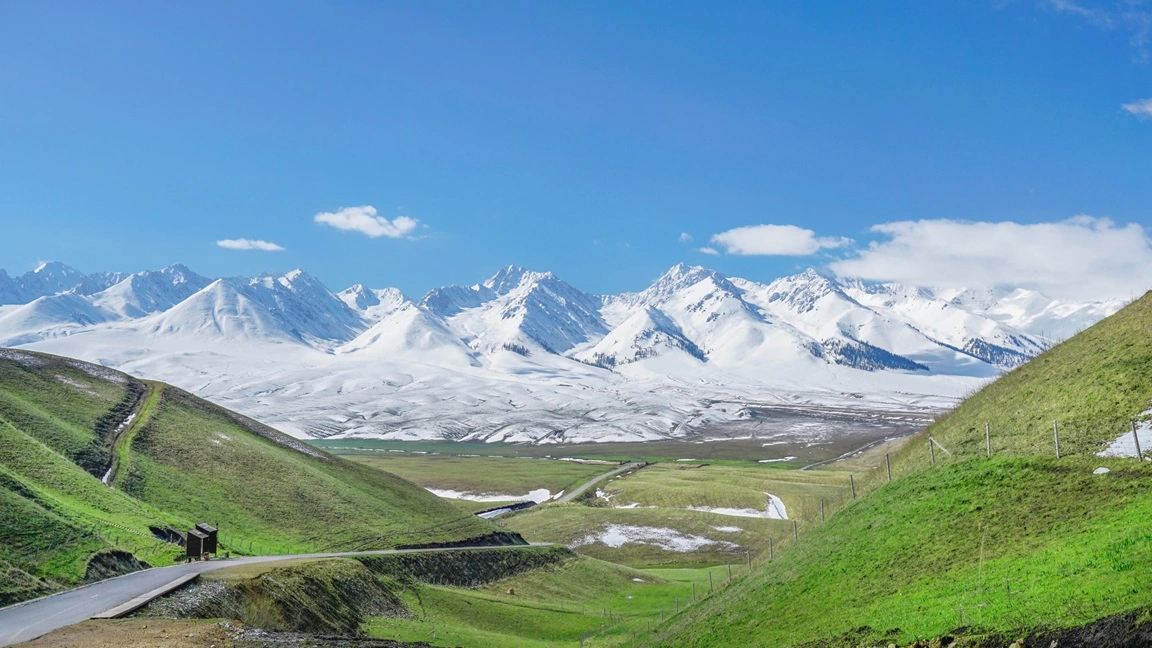
The drive through a beautiful grassland at the foot of Genie mountain, Sichuan
This is the stage where you are on the road. Below is what a day looks like and how the everyday things work, with a link to the full guide on each. The rules, the speed limits and the cameras, fuel stops, tolls, the big cities and parking are all in one guide, and it is the one to read before you take the wheel.
What does a day on the road look like?
If you have done a road trip before, one in China will feel very familiar. What is new is everything around you: the landscapes, the towns and the food.
Some days you stay where you are and explore around your hotel. On the others you have a good breakfast, you are on the road by nine, you make a long stop at the place worth stopping for, and you reach the next hotel by five, with light left to walk around the town before dinner.
A driving day is usually 150 to 400 km (100 to 250 miles), which is two to four hours on the expressways or national roads and up to six on the mountain roads in the west. How many of those days you have depends on the region, on the time you have and on the pace you like. Most regions have plenty of service areas, restaurants and coffee shops along the way, and plenty to see, so even a driving day is a full day.
A coffee stop in Sanya, Hainan
Inside a service area on an expressway in Xinjiang
We plan these days for you and stay with you on the road. We have driven every route ourselves, and we adapt it to your preferences, dates and requirements. During the trip, every day is in our app with the stops along the way, the hotel and where to park, so you tap and the navigation is ready to go.
What if I do not speak Chinese?
You do not need to. Amap gives its directions in English, the expressway signs are in Chinese and English in most places we have been, and people at shops and restaurants are happy to use a translator app. These two guides cover the road signs and the few phrases that get you through a fuel stop, a toll gate and a hotel desk.
Where do I fill up, and how do the tolls work?
Petrol stations are common everywhere you go, and they're full service, the expressways are tolled by distance, and a service area comes every 40 to 60 km (25 to 40 miles). How a fuel stop and a toll gate work, and why we ask for a car with an ETC device, is in Driving in China. Charging an electric car is cheap, but the apps need a Chinese phone number, and the charging station doesn't have service, so for now we recommend a petrol car.
A full-service gas station in Sichuan
Paying the toll with WeChat Pay
Hotels in China are modern, clean and well run. The one thing to know is that a hotel needs a qualification to take foreign guests. Hotels on booking.com and similar sites have it, but a random hotel along the road may not be able to host you, even if they wanted to, so plan the night before you set off. At check-in every hotel registers your passport, which takes a few minutes, and most take a deposit of a few hundred yuan that comes back at check-out.
How do I eat, and how do I pay?
For us, the food is one of the best parts of the trip. The Chinese food you eat while traveling across China can taste very different from what you find in Chinatowns overseas. Each region has its own local dishes and cooking styles. The most authentic flavors can only be found locally. For example, Yunnan is famous for its soup noodles and mushroom dishes, Guizhou for its spicy sour soups, and Inner Mongolia for its lamb and hot pot. Beyond regional specialties, there are hundreds of local snacks to discover across the country. When you drive yourself, you have the freedom to choose any restaurant you like and order exactly what appeals to you, unlike group tours where meals are pre-arranged. If you book our itinerary, we can also recommend local restaurants along your route to help you experience authentic Chinese food.
A popular local restaurant along the Duku Highway in Xinjiang
Ready to eat at a farmer's restaurant at Lugu Lake, Yunnan
What if something goes wrong?
Most trips have nothing to report here, but we made a guide for a traffic accident with the emergency numbers and the steps for each case, and one for the checkpoints and the fines.
Next step
That is the whole journey, from the first idea to the last toll gate. If you have not chosen where to go yet, this is the place to start.
The Drive guides
Continue the journey