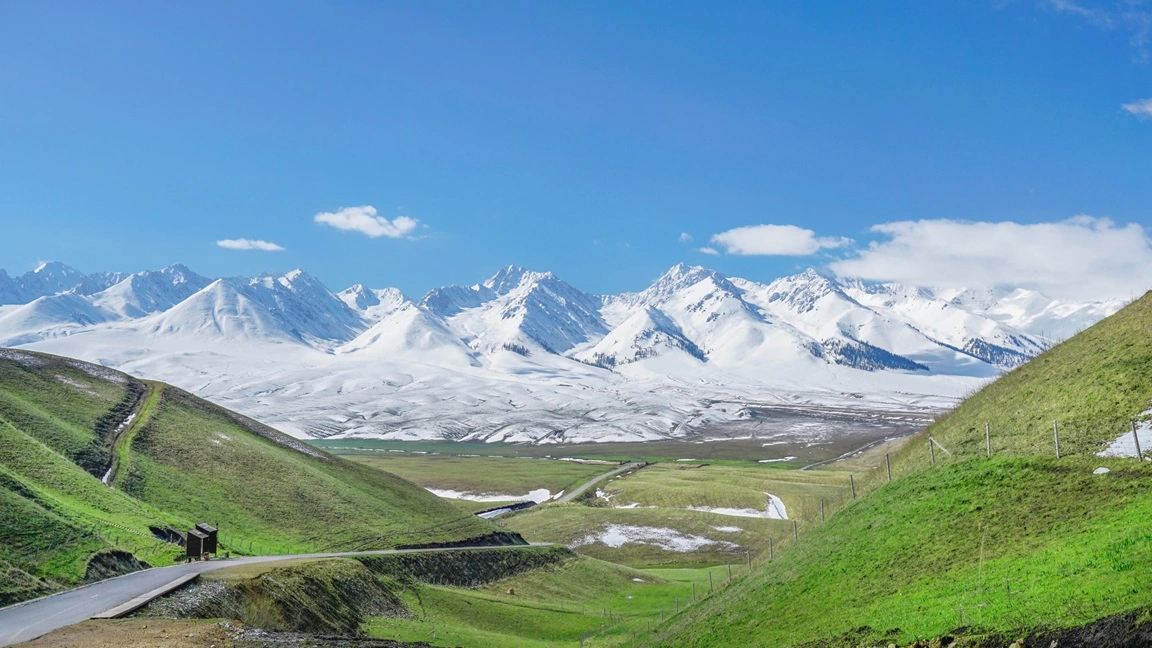
Driving in China: what it is really like, the rules, speed limits and cameras
You drive on the right, the signs use the shapes you know, and the expressways are new and quiet. What it is like, with our video, the rules table, the speed limits, fuel stops, tolls, the big cities and parking, and how a camera fine reaches you.
Most people picture driving in China as chaotic, crowded and impossible for foreigners. We have driven tens of thousands of kilometers across the provinces, with our two children in the back, and that picture is completely wrong and outdated. Our video, at the end of the next section, takes the four things people get wrong one by one, from the road. Here is what to know before you take the wheel: what it is like, the rules, the speed limits and the cameras, fuel stops and tolls, the big cities, and what happens when a camera catches you.
What is driving in China like?
Much calmer than most people expect. You drive on the right, the signs use the shapes and colours you know, the rules are mostly the same as in Europe or North America, and the expressways are new, wide and quiet. Even in remote provinces the roads are modern and well kept. Where a section is rougher, there is always a way around it, or, if you prefer, a stretch of tougher road can be part of the fun if you feel like it.
Traffic does exist: around the big cities at rush hour, and on the popular roads in the summer holidays and the national holiday weeks. Outside of that, the expressways are quiet and the traffic on the country roads is sparse. On more than one day, the only thing that slowed us down was a herd of sheep crossing the road.
What is different is the cameras. There are more of them than anywhere in the West, and they watch speed, lanes, red lights, phones and seatbelts. The good side is that drivers follow the rules, and people drive slower than in the West. In cities, drivers merge and change lanes more assertively than you may be used to, and they expect you to ease off and let them in. Once you adjust, it works.
What we do ourselves is simple: we drive slowly, we keep a good distance to the car in front, and we let the others in when they push. That is all, and it goes smoothly.
The rules that matter
Chinese traffic law is close to European and North American law. The differences are in what gets enforced, and how automatically.
| Rule | In China | What surprises visitors |
|---|---|---|
| Side of the road | Right, like continental Europe and North America. | Nothing. Roundabouts are rare outside the cities. |
| Alcohol | The limit is 20 mg per 100 ml of blood, which one small beer exceeds. Above 80 mg is a criminal offence with detention. | Treat it as zero. Police breath-test at checkpoints in the evening, especially near restaurants and on holidays. |
| Right turn on red | Allowed unless a sign or a red arrow forbids it, and you must give way to pedestrians and bicycles. | Europeans wait at the red light and get honked at. Americans feel at home. |
| Seatbelts | Mandatory for everyone, front and back. | Cameras check the driver's belt. |
| Phones | Hands-free only. Holding the phone is a camera fine and points. | Mount the phone before you set off. Amap needs a mount anyway. |
| Child seats | Under four, or under 1.4 m (4 ft 7 in), in a child seat or booster. | Local rental companies do not have them. See child seats. |
| Overtaking | On the left, with the slower trucks on the right. On the expressways there is one lane for the slower trucks on the right, then a middle lane and a fast lane on the left. | In practice, people overtake on the right and on the left without much distinction, so be careful when you change lanes. |
| Horn | Banned in many city centres. A short tap on a blind mountain bend is normal and expected. | The "no horn" sign is a horn with a red slash. |
| Pedestrian crossings | Stop for anyone on a zebra crossing. Cameras enforce it in cities. | Scooters and bicycles do not follow the same logic. Expect them from any direction in big cities. |
Speed limits and cameras
Limits are posted often and change often, always in km/h. The number in a red circle is the limit; the same number in a grey circle with a diagonal line ends it. Amap shows the current limit on screen and reads out camera warnings, in English.
| Road | Limit for cars | How it is enforced |
|---|---|---|
| Expressway (G and S numbers, green signs) | 120 km/h (75 mph) on most, 100 or 110 km/h (62 or 68 mph) on mountain sections. Minimum 60 km/h (37 mph). | Fixed cameras, plus section timing: two gantries measure your average speed over 10 to 30 km (6 to 19 miles), so slowing down for the camera does not work. |
| National and provincial roads (G and S, blue signs, no barrier) | 80 km/h (50 mph) with two lanes each way, 70 km/h (43 mph) with one, often 40 to 60 km/h (25 to 37 mph) through villages. | Cameras at village entrances, and a police car at the far end on busy days. |
| City streets | 50 to 60 km/h (31 to 37 mph) on main roads, 30 km/h (19 mph) in residential streets. | Cameras at every large junction check speed, lane, lights, phones and belts at once. |
| Tunnels | Usually 80 km/h (50 mph), sometimes 60 km/h (37 mph). | Cameras at both ends. |
Don't speed. The tolerance is small. Up to 10 percent over is normally ignored; 10 to 20 percent over is a fine and 0-3 points; 50 percent over can mean losing the permit. Section timing catches people who assume the countryside is unwatched. It is watched.
Speed cameras over on a road in Sichuan
How a camera fine reaches you
- The camera reads the plate and the fine is filed against the car, usually within a week, sometimes a month later.
- The rental company sees it in the traffic police system and charges the fine, plus a handling fee, against your deposit. This is why part of the deposit is held for about 30 days after you return the car.
- Points go on the driver's record. For a temporary permit that ends with your stay, this rarely matters, unless you come back. If you want to resolve the points, they require additional effort and time, making it difficult to handle if you need to leave right after.
The usual fine is ¥200 for minor violations like speeding, using your phone, or running a red light. Serious speeding can result in fines up to ¥2,000. Most of our clients never encounter one.
Traffic cameras over a road in Lishui, Zhejiang
How does a fuel stop work?
Petrol stations are everywhere, and they are full service. You pull up, the attendant asks 加满吗 (jiā mǎn ma, "fill it up?"), and you say 加满 (jiā mǎn) or an amount, and 92 or 95 for the octane. You pay at the pump or at the kiosk with WeChat Pay or Alipay, with your credit card linked to it, or with a UnionPay card or cash. Foreign credit cards mostly do not work at the pump on their own.
For an electric car, there are fast chargers at every service area and charging costs about a third of petrol. But charging in China usually needs a Chinese phone number, and the apps are in Chinese. We are testing a service that pays for you; until it is ready, we recommend a petrol car for convenience.
How do the tolls work?
Expressways are tolled by distance, with a gate at every entrance and exit. Mountain roads and most scenic routes are free.
There are two ways through a gate. With an ETC device in the car (the electronic toll tag on the windscreen), you take the green ETC lane and the barrier lifts on its own. The toll goes to the rental company, which passes it on to you when you return the car. Without one, you take the lane marked 人工 (réngōng, manual), collect a card at the entrance, hand it back at the exit and pay with Alipay, WeChat Pay or cash. A few expressways collect a fixed toll at the entrance instead. When the rental company offers it, ask for a car with an ETC device; it is much more convenient.
Service areas come every 40 to 60 km (25 to 40 miles) on the expressways, with fuel, toilets, hot food and shops. Popular roads in the countryside have them too.
Hand back the card at the exit of expressway in manual lane
Should I drive in the big cities, and where do I park?
Our advice for the biggest cities is simple: do not drive in them. Take the metro or a taxi, pick the car up at the airport or on the edge of town, and start the trip from there. Beijing, Shanghai and other cities like Hangzhou also restrict which cars may enter the centre at which times, and Amap warns you about it.
In smaller cities, driving is easy and parking is everywhere. Street parking is marked with white boxes, an attendant or a camera bills you by the hour, and you pay by scanning a code at the exit. A city car park costs ¥5 to ¥10 per hour or charges a daily rate, more in the biggest cities like Shanghai, and hotels outside the big cities almost always have free parking.
Questions we get asked
Is it safe for a foreigner to drive in China?
Yes, and much safer than its reputation. The roads are new, drivers follow the rules because cameras make them, and people generally drive slower than in the West. The risks are the ones you find anywhere: tiredness on long days, scooters in towns and the occasional reckless driver. Our recommendation is to drive slowly, give ample space between you and the other cars, and enjoy the road.
What side of the road does China drive on?
The right, like continental Europe and North America.
What happens if I get a speeding ticket?
The camera bills the car, the rental company charges your deposit plus a handling fee, and tells you. Typical speeding fines are ¥200. It does not affect your trip unless the offence is serious. If you accumulate points, you can work with the car rental company to resolve it. However, there will be significant additional fees.
Do I need to speak Chinese?
No. Amap (the Chinese Google Maps) is fully in English, including the voice, so it is easy to get anywhere. The important signs on the expressway are bilingual (Chinese and English), and the signs follow the international standards, so they are intuitive and easy to understand. Keep a translation app handy. You might need it when refuelling or paying tolls.
Next step
The signs themselves, and the six characters worth knowing: Chinese road signs. What to do if something does go wrong: If something goes wrong.
Where we can help
On a Dragon Roads trip, the route is driven before you drive it. We know which routes are easiest to drive and which offer the best scenery. During rainy or snowy seasons, we closely monitor road conditions and help you adjust your route as needed.