Experience · 6 trips
Hidden Villages
You have done the mega-cities and the big-name sights. Now you want the countryside: small villages, quiet roads, places without a ticket booth. These are our favorites as road trippers, in Yunnan, Guizhou, Zhejiang and Anhui, with the routes that get you there.
- Trip length
- 7 to 13 days
- When to go
- All year round
- Regions
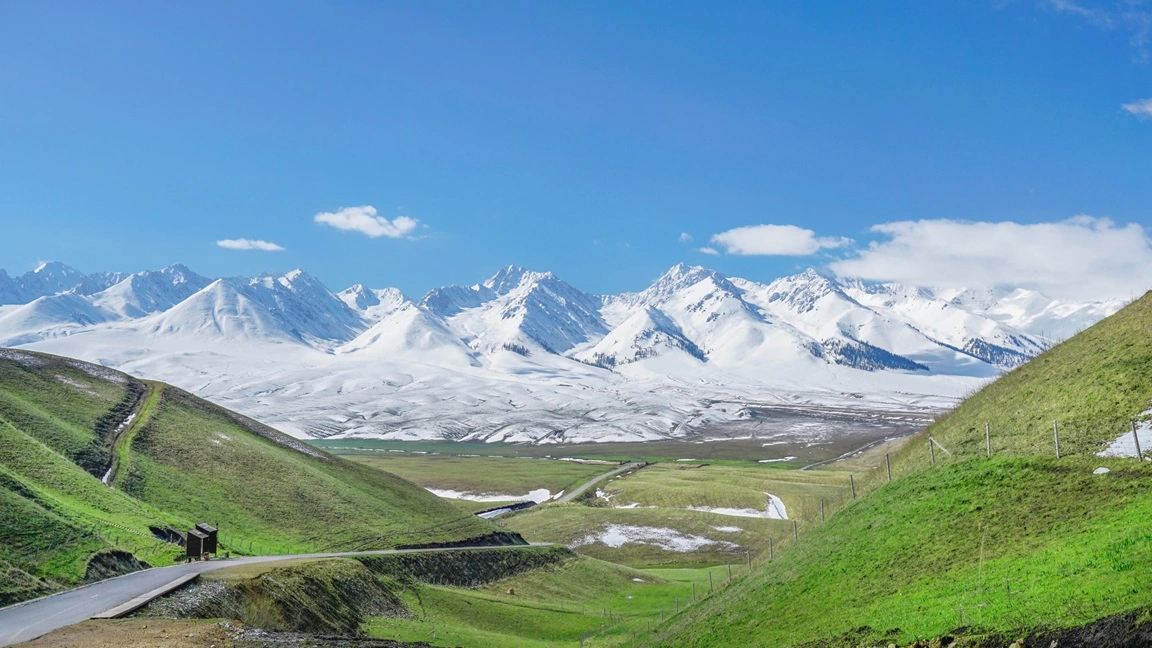
- Yunnan, Guizhou, Zhejiang and Xinjiang
- Driving
- Easy, with expressways in good conditions
- Physical demand
- Mostly sightseeing and light walks with options for hiking.
Our favorite days in China have been spent in smaller villages we had never heard before. This page is about where to find them, and why a car is the only way to get there.
Out of the cities
The skylines of the big cities are the China the outside world knows best. But the cities are getting more and more alike: the same malls, the same chains, similar streets. But adventure outside of the big cities and into the countryside and the traditional villages, and you discover another world.
These villages tend to have a few things in common. The setting is beautiful, visitors are rare, the people are very hospitable, the food is fresh and authentic, and many of have been there for a thousand years.
Most of them are not on the tourist map or on guided tours and public transport does not go there. The only way to find them and stop there is to drive.
Some of our best memories of China come from exactly that. Driving out of Shanghai, we found villages where life carries on as it always has: people cooking proper meals at home, picking green tea in the fields, a grandmother in a house up in the mountains living much as she did thirty years ago. Driving in Sichuan, we would see a pretty village off the side of the road, decide on the spot to go in, and end up having lunch in a farmer's kitchen. Nobody hurries there, life is simpler and slower than in the cities. This is a great place to slow down and relax.
The regions below combine have the densest concentration of old towns and villages we've seen. And except for the Yunnan route, which needs seasonal adjustment in winter, all of these routes work in every season.
Yunnan villages: varied, mysterious, ancient
Yunnan drops in steps from the northwest to the southeast, from snow mountains above 6,000 meters down to river valleys a few dozen meters above sea level. That fall, combined with the latitude, fits three completely different climates into one province.
The north is the heart of the Hengduan mountains: snow peaks, gorges and highland meadows in layer after layer, and very few people. Around Shangri-La it is a Tibetan world. Villages are scattered between meadows and river valleys, with big Tibetan houses of rammed earth, prayer flags and white stupas at the door, and yaks grazing not far off. Further north, on the shores of Lugu Lake, live the Mosuo, whose families are centered on the mother, one of the rare matrilineal traditions left in China. This was also the route of the Tea Horse Road. For more than a thousand years, mule caravans carried Yunnan tea to Tibet and came back with horses, furs and medicinal herbs, and the staging posts and markets along the way became today's old towns. Shaxi, near Jianchuan, is the best preserved of them.
The middle of the province is a belt of highland lakes running from Kunming to Dali. Yunnan's earliest city states were built on these shores, the flat basins beside the lakes are the best farmland in the province, and villages have sat here for centuries. Around Erhai Lake, the courtyard houses of the Bai have white walls and grey tiles, with ink-brush paintings on the screen walls and gatehouses.
The south is hot and humid, with real tropical rainforest in places, and is called China's own Southeast Asia. That is more than a remark about the climate. The Dai people here follow the same Theravada Buddhism as Thailand and Myanmar, their villages have gold-roofed temples, and their new year is the Water Splashing Festival. On Jingmai mountain, the Blang people have grown tea in the forest for centuries, and that ancient tea forest, together with the villages among the trees, is now a World Heritage site, the first in the world dedicated to tea.
Guizhou villages: untouched, scattered, colorful
Guizhou is all mountains and rivers. For a long time the roads were bad, outsiders could not get in and the locals rarely went out. That is exactly why its old villages have survived as they were.
There is an old local saying: a different people on every mountain, different customs every ten miles, different traditions every hundred. The karst mountains keep people apart. Each ethnic group settled along its own valley floor or stream, and none absorbed the others.
In the southeast of the province, the Miao build their stilted wooden houses in tiers up the hillsides. The old buildings of Upper Langde are still complete, and at festival time the whole village sets out a long-table banquet. A Dong village always has a drum tower at its centre and a wind-and-rain bridge at its entrance, and around Zhaoxing the Dong grand song is sung in many parts by dozens of voices, with no conductor and no instruments. In the southwest, around Xingyi, the Bouyei villages are built with stone-slab walls and stone-slab roofs, scattered between the peaks and rice fields of Wanfenglin.
Things have changed in recent years. Bridges, tunnels and expressways have opened Guizhou right up. Several of the highest bridges in the world are here, and driving across them is an experience in itself. For a driver, it is a rare combination: the roads are open, and the villages are still there.
Zhejiang and Anhui: prosperous, poetic, cultured
Zhejiang belongs to what the Chinese call Jiangnan, the water country south of the Yangtze: white walls and black tiles, small bridges over flowing water, tea hills and rice fields. It is the landscape that appears most often in classical Chinese painting and poetry, and the Chinese picture of the ideal home.
Water is the soul of the Jiangnan old towns. Most of them spread along both banks of a canal, the houses are built to the water's edge, and people went out by boat. Wuzhen is the best preserved of them. The hills of northwest Zhejiang are a different world again. Around Anji and Moganshan there is one continuous sea of bamboo, with villages tucked into the folds of the hills. More than a hundred years ago the Western residents of Shanghai built stone villas across Moganshan to escape the summer heat, and today those old houses, together with the farmhouses around them, have become some of the earliest and most refined guesthouses in China.
Anhui next door is the home of Huizhou culture. Its old villages sit with the mountains at their back and a pond in front. Xidi and Hongcun, at the foot of Huangshan, keep a great number of Ming and Qing houses and were listed as World Heritage in 2000. The two provinces are neighbors, and with enough time they can be combined into one road trip.
Sichuan and southern Xinjiang
We have recently been to both on road trips, had a great experience and found a lot of hidden gems. We will add them to this page soon.
Want to know more?
Every route on this page passes through villages like these, and some of the best are the ones you stop at on the way, because you saw them from the road. If you would like to know more about any of these regions, or want help putting an itinerary together around them, contact us and we will help you plan it.
Set routes, adjusted to your dates
Our road trips to hidden villages
Loading amazing trips...